does pouring water on lava actually make obsidian
Pouring water on molten lava can create obsidian-like volcanic glass under specific geological conditions, but it requires rapid cooling of silica-rich lava rather than casual water contact. This process triggers thermal shock that prevents mineral crystallization, forming smooth glass instead of crystalline rocks. However, natural obsidian formation involves complex environmental factors rarely replicated through human intervention.
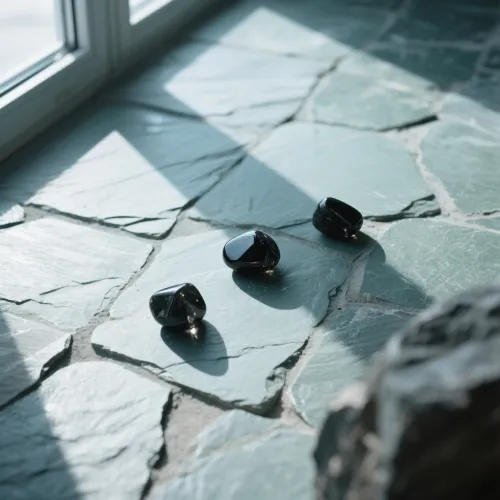
Imagine standing on a basalt cliff, watching thick orange lava crawl toward the ocean. As waves crash, there's that glorious hiss—steam erupting, seawater vaporizing. And in your palms, maybe you're holding a black glassy stone found on the shore years ago. You can't help but whisper to the wind: "Did this begin when fire met water?" Well, perhaps—but nature’s craftsmanship holds secrets we’re still decoding. Isn't it fascinating how something formed through chaos becomes smooth enough to feel like frozen midnight in stone?
What We'll Explore Together
When you watch viral videos of lava flows hitting ocean waves, that steam explosion feels transformative—like creation happening before your eyes. Truth is, your kitchen experiment won’t yield obsidian. Natural obsidian birth demands a choreography of heat, viscosity, and timing you'd only find near volcanic vents or fissures.
For volcanic glass to form, water contact must cause sudden thermal shock—freezing lava’s movement so abruptly that atoms can't arrange into crystals. This rapid cooling creates amorphous glass rather than structured minerals, locking its liquid-like chaos into solid permanence under specific geological pressures.
Geological Mechanics Behind the Process
Think of it like an unfinished symphony. When silica-rich lava cools slowly, minerals organize themselves into rhythmic crystals. But splash water on it? You disrupt the entire concert—mid-note freezing creates glassy textures still holding their molten origin story.
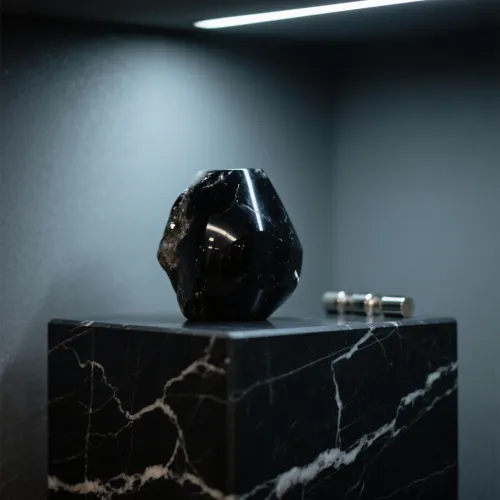
Inspect any broken volcanic glass shard: you’ll notice its conchoidal fracture patterns, like ripples frozen against time. This curved chipping is nature’s signature for glass formations and forms because there are no cleavage planes in amorphous structures—only brittle unpredictability that carves those signature razor edges.
We mimic volcanic processes with furnaces and quenching tanks, but labs lack Earth’s raw power. Artificial volcanic glass tends to be uniform—missing the wild imperfections that whisper ancient eruptions.
Controlled experiments often miss the critical nuance: trapped gas bubbles in natural samples. Microscopic bubbles form during rapid quenching in actual lava flows, capturing steam pockets like tiny time capsules. While lab glass looks flawless under magnification, authentic geological evidence carries these minute imperfections.
Identifying Genuine Volcanic Glass Features
Imagine holding two similar black stones—one natural, one synthetic. The difference lingers in silent details: how light refracts, edges curve, and surfaces glimmer after centuries untouched.
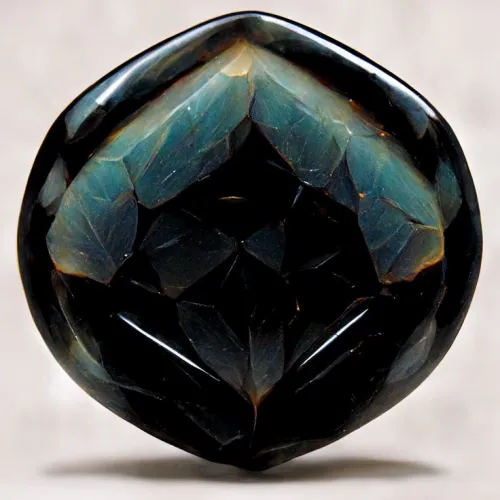
Genuine volcanic glass has translucency at thin edges, allowing faint light passage through its ink-black or deep green body. Beyond hue, its luster transitions between glassy and vitreous when angled against sunlight—proof of silica’s molecular dance interrupted by abrupt cooling.
So you're hiking near volcanic regions with a rock hammer and curiosity? Start by scratching your find discreetly. That moment reveals whether your pocket holds treasure or tourist trinket.
Essential Field Techniques
First, assess how your sample interacts with light. Real volcanic glass has shifting reflection patterns under different illumination sources—sunlight reveals inner depths artificial pieces lack. Bring a pocket flashlight.
Practical Handling Observations
Next, tap or snap a fragment carefully. True volcanic glass cleaves with sharp conchoidal edges shaped by tension lines within its structure. If it leaves a curved fracture like broken bottle glass, it’s likely authentic. Remember: authentic stones feel like the Earth held its breath mid-eruption.
- Observe light response: Rotate sample under sunlight
- Test fragility: Gentle pressure reveals fracture mechanics
- Seek texture variations: Weathering patinas validate longevity
Thermal and Environmental Stability Factors
You wouldn’t place volcanic glass beside your fireplace—centuries may not destroy it, but abrupt heat shifts disrespect its delicate equilibrium. Think of internal stresses as frozen memories of its explosive birth.
Though environmental exposure causes subtle weathering over millennia, obsidian preserves core integrity under stable conditions. Paradoxically, its thermal shock resistance becomes low once formed—because existing tension lines fracture easily when reheated. Store volcanic glass away from radiators or direct heating vents.
Volcanic Glass Applications Through Human History
Ancient surgeons used volcanic glass scalpels to suture wounds. Warriors shaped arrowheads sharp enough to pierce hides—their technology forged in eruptions and glaciers. Modern neurosurgery still mimics these fine fracture lines as nature’s original surgical blade design.
When visiting museums, notice surgical artifacts: their fracturing characteristics remain consistent across millennia due to structural integrity preserved through generations. Even ancient blades unearthed today cut with ghostly precision because archaeological samples show remarkable compositional stability in controlled environments.
Nature's Guidance in Stone Formations
Ever noticed how obsidian both cuts and reflects? It’s Earth showing us transformation born from turbulence. As you study volcanic glass, notice how the very fractures we label as flaws become strengths honed over eons. Trust life’s cooling periods—they shape resilience that can't be rushed. When things shatter unexpectedly, perhaps what rebuilds emerges stronger and more nuanced.
Common Myths and Scientific Facts Clarified
Q: Can I create obsidian by pouring a bucket on molten lava myself?
A: Highly unlikely. Natural conditions demand specific lava viscosity and rapid quench timelines almost impossible to replicate safely without industrial equipment.
Q: Does all black volcanic rock count as obsidian?
A: No; genuine obsidian requires specific amorphous structure verified through glassy textures and conchoidal fractures. Other volcanic rocks like basalt fracture differently.
Q: Why does obsidian seem sharper than steel?
A: Molecular chaos creates microscopically jagged fracture planes—more irregular than manufactured metal edges—allowing extraordinary cutting precision when freshly cleaved.
Q: Can obsidian deteriorate over decades?
A: Stable, dry conditions preserve volcanic glass indefinitely, but long-term display may create subtle surface hydration layers. Handle gently to avoid micro-chipping erosion.