is obsidian a mineral
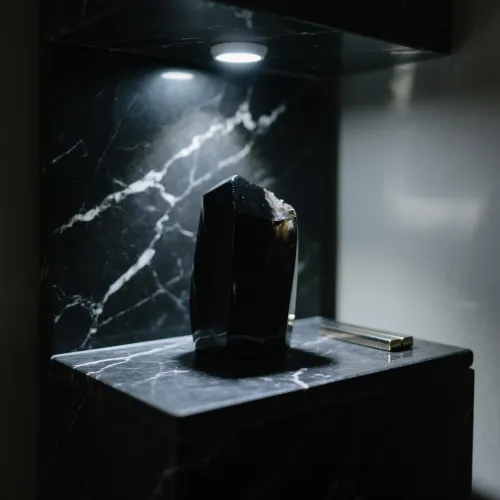
While obsidian shares visual similarities with minerals, it's scientifically distinct due to its formation process. This naturally occurring volcanic glass forms when lava cools too rapidly for crystals to develop, lacking the crystalline structure essential for mineral classification. Its composition primarily consists of silicon dioxide mixed with trace elements that influence color and opacity, resulting in smooth surfaces and unique translucent properties.
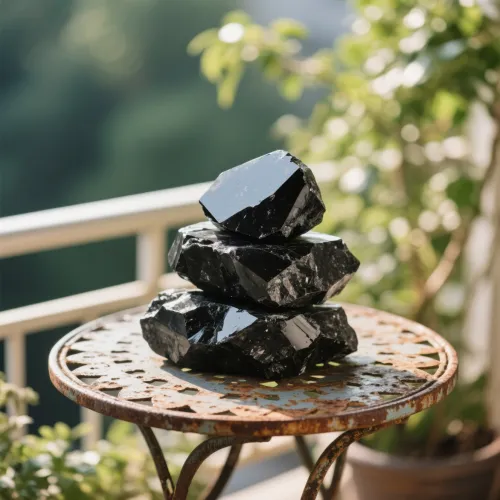
You've probably held this glassy wonder in your palm, maybe drawn to its reflective surface like a moonlit pool. Or perhaps you've passed jewelry displays, feeling that deep black pull you inexplicably toward volcanic secrets. That tug? It’s the universe's quiet invitation to explore what our eyes can't immediately categorize – much like life's ambiguous moments where things refuse neat labels. What seems solid might be fluid; what appears cold contains ancient fire. The stones in your hand whisper about patience: volcanic pressures transforming chaos into something stunningly smooth and sharp all at once. Maybe we’re drawn to its mystery because it defies easy answers, inviting us to sit comfortably with "both-and" rather than "either-or."
What We'll Explore Together
Obsidian Classification Simplified
It’s easy to confuse this volcanic stone with typical crystals, especially when browsing glossy collections. Many enthusiasts assume all earth-formed solids qualify as minerals, feeling puzzled when their shiny black rock doesn't align with geologist terminology. This gap between appearance and technical definition often creates hesitation.
The crucial distinction lies in molecular arrangement: while true minerals develop highly organized crystalline patterns like architectural blueprints, obsidian’s signature characteristic is its amorphous volcanic glass formation. Without crystal structure, it's fundamentally more kin to window glass formed by lightning strikes than to quartz crystals. Its elemental foundation typically shows silicon dioxide with impurities that shift appearance dramatically, which explains why two nearly identical-appearing pieces might differ chemically.
Why Structure Matters
Structural differences manifest clearly under magnification. True minerals reveal geometric perfection when fractured, while obsidian breaks with curved conchoidal fracture patterns. This isn't academic nitpicking – it’s the reason ancient toolmakers cherished obsidian's ability to produce sharper edges than steel.
A Matter of Process
Consider stone formation as nature's cooking show. Minerals form through slow-simmering recipes permitting crystallization, while obsidian comes from geological "flash freezing." This thermal short-cut denies molecules time to organize, trapping them in chaotic beauty.
Imagine standing near erupting magma – that primordial moment when liquid rock meets cooling environment. Obsidian birth requires specific planetary choreography: thick lava flows encountering air or water rapidly enough to trap elements mid-dance before crystallization occurs.
This violent formation story explains its fascinating contradictions: visually heavy yet surprisingly light in hand. Despite feeling cool upon touch like glassware, it typically shows black, green, or red hues due to trace elements like iron suspended in its matrix. You might also notice how daylight changes its appearance – indoor lighting tends to deepen its colors into velvety depths due to environmental light altering color perception. That shifting personality isn't inconsistency; it's a natural feature.
Reading Visual Messages
Conchoidal fracture patterns define its functional legacy:
- The curved sharp edges made effective prehistoric blades and tools
- Breakage patterns provide authenticity clues – uniform curves signal natural formation
- This fracture behavior explains modern lapidary challenges
Surface Poetry
Obsidian might present:
- Vitreous luster with mirror-like reflections
- Translucent zones where light plays ethereal games
- Minor cloudiness where trapped gasses escaped incompletely
Practical Uses and Selection Experiences
Whether seeking functional art or decorative accents, practical questions arise: Will that stunning pendant withstand daily wear? How might my necklace transform over years beside my skin? Let's address wearable concerns through earthly wisdom.
When choosing pieces, notice how collectibility depends on texture and color consistency rather than rarity. What resonates as perfect will differ person-to-person – follow that intuitive pull. Expect natural substances to mature: with regular handling developing a subtle patina that adds depth to the surface over seasons. And while polished finishes maintain glow when shielded from abrasion, daily use will likely reveal faint affection lines on lighter varieties.
Creative Possibilities
Modern crafts harness obsidian's paradoxes through:
- Decorative carving utilizing fracture tendencies
- Sculptural fragments highlighting natural edge geometry
- Architectural accents playing with light absorption
Preserving Presence
Think gentle caregiving rather than preservation:
- Store away from diamond jewelry to prevent moderate scratch resistance vulnerability
- Avoid thermal shocks – sudden temperature changes invite fractures
- Cleanse with mild water rather than chemicals that may etch surfaces
Your Inner Volcanologist Knows
Sometimes we ignore faint internal signals waiting for louder confirmation, much like scientists initially dismissed volcanic glass's significance. Yet beneath obsidian's deceptive simplicity lie eons of planetary transformation. It reminds us that beauty forms even in nature's most turbulent moments. Hold your challenges gently – what seems destructive might be creating new foundations. Notice how subtle light shifts reveal unseen colors in what you thought plain. Allow your journey to proceed at its natural rhythm; we cannot always force crystallization. And when facing sharp edges? Remember: the stone’s most fractured planes reflect light most brilliantly.
Identifying Authenticity Through Visual Traits
Whether assessing gallery pieces or travel market finds, authentic discernment prevents disappointment from misrepresented materials. Authentic pieces carry unique visual signatures synthetic imitations rarely replicate.
Obsidian reveals itself through light dialog: vitreous surface luster appears glassy without plastic’s artificial shine. True specimens also demonstrate the environment’s influence: indoor illumination tends to deepen hues, while sunlight might awaken hidden color spectrums. Beware perfect uniformity – genuine examples often feature minor bubbles, flow lines, or subtle internal tension visible at angles. And when purchasing online? Remember visual depth often differs significantly between digital images and physical observation.
The Weight of Truth
Consider tactile evidence:
- Genuine pieces feel cool upon contact beyond room temperature
- They carry surprising lightness compared to similarly-sized minerals
- Edge examinations reveal characteristic fracture topography
Nature's Imperfect Perfection
Authenticity signals include:
- Color zoning rather than synthetic uniformity
- Microscopic pits from gas escape during formation
- Gentle cloudiness in translucent areas
Common Misconceptions and Earth Science Insights
Q: Is it true obsidian continues hardening over centuries?
Unlike mineral crystallization processes, volcanic glass structures don't evolve after solidification. What you hold today presents the same molecular formation as when cooled millennia ago – a timeless moment preserved.
Q: Can it scratch common window glass since both are glass?
Interestingly, scratch resistance ranging 5–5.5 on the Mohs scale makes it slightly softer than manufactured glass. This moderate hardness explains why ancient tools required specialized percussion techniques.
Q: Do different colors indicate different healing properties?
Science confirms color variation stems simply from trace elements like iron. While emotional experiences stem purely from visual enjoyment, any deeper resonance reflects personal perception not geological properties. Appreciate its beauty, but trust medical science for health matters.