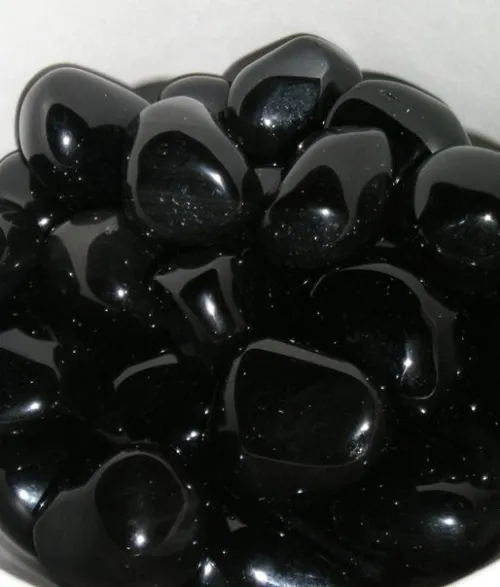
how obsidian formed
Understanding **how obsidian is created** begins with the rapid cooling of silica-rich volcanic lava—a process that prevents crystal growth and results in natural volcanic glass. Its signature smooth fracture pattern develops when the molten material solidifies almost instantly upon contact with air or water. Impurities in the lava composition during this formation create the deep blacks, browns, and iridescent streaks that distinguish obsidian pieces.
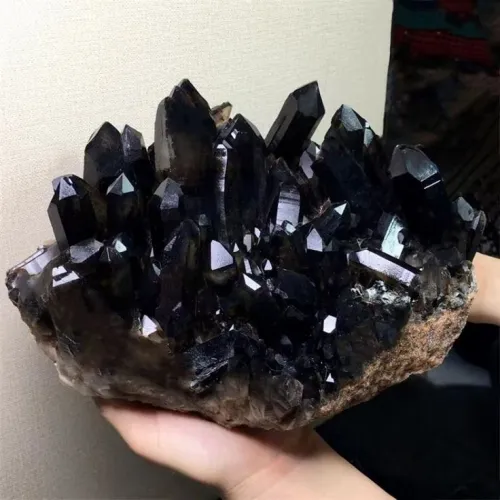
You're holding a piece so dark it feels like captured midnight, cool against your palm - formed when the Earth's fiery blood met sudden chill. Well, maybe not exactly "sudden" in human terms, but geological quickness changes everything. When that molten river from underground worlds hits air or water? It freezes fast, like time itself holding its breath. Many find themselves drawn to these deep, glassy pieces, not knowing precisely why. Maybe it's the way light dances on surfaces birthed in shadow, or the intuitive pull toward something that survived both fire and ice. That moment between picking up the stone and slipping it in your pocket? That's curiosity brushing against earth's ancient memory.
What We'll Explore Together
Picture magma charging toward the surface like an express elevator, only to plunge into cool reality at exit points. That dramatic temperature drop triggers something remarkable - molecules literally don't have time to organize into crystals. Instead, random links form a chaotic yet resilient glass network. Lava composition variations become visual poetry - impurities create unexpected iridescent flashes where light bounces between microscopic layers.
This amorphous structure explains the characteristic smooth conchoidal fracture pattern you'll notice, almost like flint. Rapid cooling also traps volcanic gases differently than slower-forming minerals. While crystals might form air pockets, properly cooled volcanic glass often reveals a dense, uninterrupted texture when you hold it against light - a signature of its authentic formation journey.
Not all volcanic material has the right chemistry for this transformation. Success depends on silica content crossing a critical threshold - too little, and you get crystalline rock; just enough, and you get nature's glass factory. Location matters tremendously too. Edges of lava flows where rock touches water or air cool fastest, creating the optimal conditions for conchoidal fractures to develop along those glassy surfaces.
Even well after formation, obsidian's volcanic legacy shines through. That cool-to-the-touch sensation? It's a thermal memory encoded by volcanic origins where density and structure create an interesting thermal conduction story. This material might exhibit fascinating personality changes as lighting shifts, appearing almost impenetrably black under soft light while suddenly revealing reflectivity under direct sunlight like dormant memories awakening.
Practical Applications and Functionality
That glassy structure offering remarkable resilience makes obsidian adapt beautifully to daily life, whether holding steady as your desk statue or catching compliments in jewelry. Crafting sharp edges comes surprisingly naturally to volcanic glass - an ancient gift still present today.
Daily Companionship
These pieces tend to handle typical indoor living conditions gracefully—think accidental bumps against books or keys. Their glass composition provides an inherent shock buffer. For jewelry applications, obsidian pairs gracefully with metal settings due to its chemical neutrality—they create harmonious relationships without causing reactions over time.
Tender Loving Care
Despite its durability, gentle cleaning maintains appearances best. Non-abrasive cleaners preserve surface integrity without risk of cloudiness or patina development. While a lifetime piece in stable conditions, consider keeping vivid obsidian tones intact by storing them away from intense sunlight. Micro-scratches may subtly change surface reflectivity through years of handling without compromising deeper structural integrity, much like how life experiences reshape us without breaking core resilience.
Emotional Weight
People often report connecting with obsidian on sensory levels. Wearers describe noticing its cool weight against skin, almost like carrying a piece of mountain air with them through warm days. Crafters admire how light interacts differently across planes—each piece seems calibrated to catch brightness when needed most.
User Experiences and Selection Advice
Choosing obsidian can feel like finding geological soulmates—pieces that resonate beyond specifications. Photos sometimes mislead due to lighting variations, so observe textures with both imagination and realism.
Listening to Touch
Pay attention to thermal feedback that speaks of volcanic origins. Quality pieces tend to feel distinctly cool when first touching skin—a characteristic sign of thermal conductivity from its formation. Trust your fingers reading surfaces like braille; authentic texture variations often form subtle, unbroken patterns rather than manufactured uniformity.
Origin Stories
Geological histories predict traits:
- Flow patterns resembling water waves imply specific eruption conditions
- Banding patterns may reveal mineral-rich cooling sequences
- Regional differences can influence typical durability characteristics
Notice how light interacts with potential pieces. Authentic specimens often contain unexpected personality traits—veils, shadows, and depth that imitation versions struggle copying convincingly.
Honoring Nature's Whisper Within
Something about holding earth's transformed fire connects us to beginnings. When encountering deep black surfaces hiding hidden rainbows at certain angles, it mirrors life's quiet wisdom—truth revealing itself precisely when light meets perspective. These fragments remind us that moments of friction create beauty. Just as geological pressures transformed liquid mountain into glass, what we perceive as disruptions or fractures may actually cultivate inner strength and light-catching edges we didn't know we possessed. Choosing something natural asks us to honor quiet discernment over noise. Maybe it’s simply practicing how to see more.
Signals for Identifying Quality Obsidian
Authenticating natural volcanic glass involves decoding subtle geological signatures left from its fiery birth. Density matters—minimal air bubble evidence indicates proper formation rhythm versus synthetic shortcuts.
Visual Signatures
Observe under magnification where truth appears:
- Imperfect patterns hinting at volcanic violence over factory molding
- Natural streak variances instead of unnaturally consistent coloring
- Internal veils or mineral traces frozen mid-movement
Genuine treasures display uniqueness through light tests - internal features becoming visible only when lit from specific angles, almost like shy confessions of their origins. Meanwhile, synthetic alternatives often feel optically flat, lacking dimensional depth developed naturally through turbulent formation journeys.
Geological Context and Common Misunderstandings
While seemingly fragile, obsidian's legacy proves surprisingly resilient—archaeologists uncover intact ancient tools demonstrating remarkable preservation. Yet misconceptions persist about its fragility today.
Long-Lasting Bonds
Environmental resilience emerges from volcanic origins. Obsidian often handles exposure better than porous stones, maintaining its presence outdoors despite seasonal fluxes that challenge other materials. That developing surface patina or micro-scratches over years of wear? Those transform appearance without compromising deep structure, telling personalized stories through light differently than glossy newness.
Understanding Boundaries
Despite its resilience against environmental pressures, sharp blows along edges may still cause fractures—like how rapid cooling originally crafted its structure. This potential requires mindful consideration that honors the piece's inherent qualities, acknowledging both its endurance and delicacy when crafting or wearing.
Historical artifacts enduring centuries beautifully counter fragility myths—their survival demonstrating how strength arises from authenticity rather than force. Observing their preservation whispers about accepting natural life marks rather than chasing unsustainable perfection.